
Selling Without Selling.
- Erik Becker
- Jan 28
- 5 min read
Updated: Jan 29

The most powerful way to get someone to believe that something is true is to convince them that they have come to that conclusion on their own.
That idea is a core principle of self-persuasion; it’s nothing new to psychology.
But, in my experience, it often feels like a cognitive black hole to corporate brand managers or the C-Level executives they report to: the idea that people are most deeply convinced by reasons they discover themselves rather than those handed to them by others.
So how do we, as brand stewards, project managers, and CMOs give our audience this opportunity, the opportunity to believe in the undisputed superiority of our product by the process of discovering it for themselves?
What Doesn’t Work: SELLING

Let’s start by looking at what doesn’t work: nearly all advertising and marketing attempts the vast majority of corporations and agencies typically engage in.
Advertising and all of its half-siblings and step-cousins are born with disadvantages: the signifiers we force into them, the restricted timeframes forced upon them, and the pre-defined environments we force them into.
The ‘call to action’ the false sense of intimacy, the poor acting of an influencer, the generic reason to believe, the pop-ups, the mid-ad roll, the desperate race against the countdown to skip button activation.
It all screams: “you are about to be sold to! This is an attempt to persuade you!”
Even the subtle "signals" of an ad—like an increase in volume, certain quick cuts, or a high-contrast logo—can trigger defensive responses before the actual message begins.
One is never persuaded while their guard is up, when they are on the defensive. You know this.
Intuitively now, the consumer raises their guard, go on the defensive and execute counter-offensives: they fast-forward, they scroll, they close, they counter-argue, they mock, they mute. Under the barrage of advertising messages, they may even leave the webpage they pro-actively sought out for content; like if you’ve ever tried to browse the internet for a recipe.
And how does traditional advertising and marketing combat this?
It is the latest of new solutions to our industry: we rely on technology to increase the volume of our messages, to make fast-forwarding or even muting impossible, to hijack our potential customers by the eyeballs and ears in an act of forced exposure to our messaging.
Are we achieving our business goals here? Or are we just creating more resentful viewers who grit their teeth and ‘take it’, keeping an eagle eye not on our commercial right in front of them, but the lower right hand corner of the screen where the ‘skip’ button lives.
These technological traps are considered advantages by rote, when they should be considered embarrassing, and shameful.
What Does Work: NOT SELLING

Ads, by their very nature, preclude most opportunities to offer the internal motivation, the active engagement, and the autonomy that are non-negotiable preconditions for ‘coming to the answer on my own.’
In our show A Different Breed, an entire first season of 9 episodes which was paid for by Purina for the specific and stated purpose of raising brand awareness and selling dog food, there are zero mentions of ‘Purina Dog Food.’
There are dozens of dogs and at least that many dog lovers who take up a total of 4.5 hours of screen time, but not one dog owner fills a dog bowl with any dog food and not one dog noses into an artistically-styled heap of dog food—much less Purina dog food.
We interviewed 30 people for over 100 hours in their homes, and yards, and barns, and competition fields and there is not a single bag of purina dog food leaning casually against a back wall as an after-thought.
This series, which ran on Amazon Prime, was all about Dog Sports.
Purina is the sponsor of the Incredible Dog Challenge and the Purina logo is a natural part of that background when at the competition—as innocuous to the viewers ‘ad’ radar as brand panels at baseball games.
Through 9 episodes and a total of 4.5 hours, Purina remained completely internal to the story—the story was never, ever, ever about Purina.

And guess what happened... Purina sold a LOT of dog food, a figure independently audited and quantifiably linked to this show—by intentionally, relentlessly, emphatically, and sometimes even hostilely not selling dog food. Additionally, the series creates a flywheel by minting new social media influencers, bolstering the existing IP of The Incredible Dog Challenge, expanding goodwill with the dog sport community and rescue community, and expanding long term brand equity and trust with consumers.
For the Brand Managers and especially for the Purina Brand C-level executives, Selling by Not Selling was an exercise in unyielding and terrifying bravery.
Tell an Entertaining Story That’s True
Around a Shared Value That’s Authentic
And Let the Customer Sell Themselves


A Different Breed works because it wasn’t built around messaging. It was built around Purina’s belief that “People and Pets are Better Together.” This is never ever said out loud. It’s self-evident in the storytelling.
(Notice it does not say: Purina Dog Food Brings People and Their Pets Together. You know why? Because that’s bullshit.)
And then, they did not stop there.
They did not write this up in a creative brief to have it mimicked or be made a mockery of in today’s advertising vehicles which could neither do justice to it nor save it from the self-mockery of tired marketing tricks.
They did not yield to either their natural instincts to sell dog food, or the perversely unclever and long-failing idea of pretending not to sell dog food, but actually trying to sell dog food.
Instead, what they decided to sell was a Brand Stand, a Declaration of Value: that people and pets are better together.
And they invested the necessary time into genuine, authentic stories that were engaging and entertaining that let viewers decide for themselves what was ‘true’ what was ‘meaningful’ what was ‘relevant’ and what was inspired, to them.
To Have a Better Chance of Selling, Reject the ‘SELL’.

And the hardest part, and the most crucial part, was rejecting the ‘sell.’
Because by rejecting the sell, there was no intrusive advertising messages to disrupt the flow and break the bonds of trust the audience was building with the story.
By leaving all brand associations within the context of the story—and by not insulting the viewership’s familiarity with brand tactics and persuasion knowledge (bag-o-purina in background), the connection between viewer and the value declaration implicit in the story’s entertainment grew deeper and more natural.
Because Purina never interfered with the viewers engagement to ‘hear their own brand name spoken by a paid announcer”, consumers never engaged in ‘skeptical defense mode’ or ‘loss of agency’, or the most profoundly damaging: ‘loss of trust’. When you’ve been lured into an entertainment that makes you feel warm things and reinforces your own dearly held values, only to learn it was all a marketing trick after all.
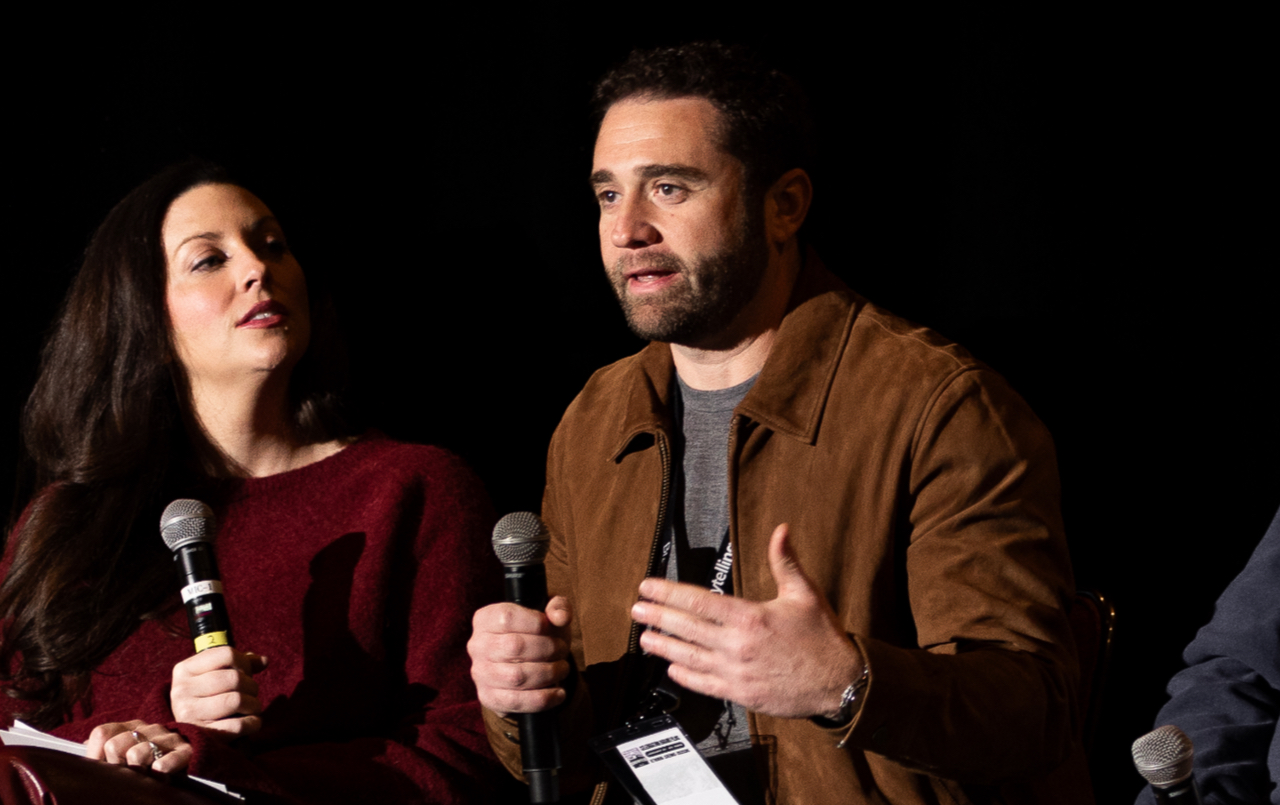
I’m thinking more and more, after my experiences at Sundance and with this series that the secret to Selling is to avoid all the pitfalls and irreversible damage done by trying to Sell in today’s marketing-saturated, exhausted-consumerism market.
Instead of inserting your strategy and creative into ‘dead’ vehicles, let them be carried by living ones. Entrust them to the story, and the authenticity of that story, and the real—like Purina did with real trainers, real dogs, real relationships.
And don’t let anything false or dead into that story. Ever.
What do you think? Is this something you’d like to have further conversations about? Maybe with other people who think about this stuff? Would it be cool to you to hear from other people across other disciplines—maybe philosophy, or psychology, or physics—that may offer cross-disciplinary insight?
If so, send me your name and your contact info an we can get deep into it with no other objective than to keep talking about…all of it.
Erik Becker
Co-Founder & Managing Partner
InkBlot Narratives

Comments